In this day and age of technology and digital communication, spell check is a wonderful tool. It allows the author of written expression the ability to enhance the reader’s experience by communicating effectively and correctly.
Back in my college days, we weren’t as fortunate. Leather bound copies of Webster’s Dictionary and Roger’s Thesaurus were never far from my reach. I loved words and I wanted to be sure I expounded my visions in the purest possible form. During those impressionable years, I attended school with many people who seemed to be as permeable to prose as I felt I was.
There were certainly exceptions to that rule, and my best friend Sandra had a college room-mate who was the poster child for the opposite end of that word spectrum. (you know who you are!!) She spelled phonetically. However it sounded to her, she seemed to create a new language to convey her message.
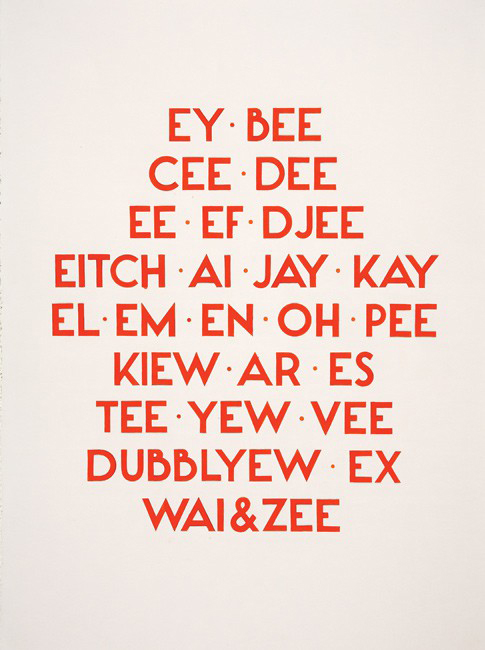
They were very caring room-mates and diligent to a fault about keeping the others aware of their whereabouts to alleviate worry. They maintained a white-board on their refrigerator so they could communicate where they were and when they were expected to return. While visiting the apartment one afternoon I happened upon this board and stared at it with growing wonder. Although the symbols on the board resembled those of the alphabet I could not decipher the language in which the message had been composed.
Upon realizing that I had not left the kitchen, Sandra returned to find me still engaged in a staring contest with the white board. As many times as I listed my head from side to side I still could not digest the meaning of the strange epistle on the fridge. It wasn’t until Sandra took me word by word through the note, sounding out every syllable, that I finally understood the concept of phonetic spelling. After that the intent of the scribble became crystal clear.
The “fonetik spelr” and I are still close friends to this day. I find it amusingly ironic that she studied Sign Language in school!! I am happy to report that she has mastered much more of the English language – no longer will we wury bicuz she tuk her baik to wurk and waz caat in trafik – clooz the buuk on this peij, no morr keiass.
 polysyllabic profundities
Okay, maybe it is too early in the morning. Am I close? “No longer will we worry because she took her bike to work and was caught in traffic – close the book on this page no more ?”
Wow….you speak Sheran (that’s her name)…..and the last word was chaos. Well done!! Where were you while I was in college? Haha
Lol…maybe I’ll add that to my resume. 🙂 Ah, chaos…now I see it! Cute post!
Thank you!
English is a hard language to master because of this. Two words can be spelled almost idenitcally and sound completely different. Most and lost, for example. Most other languages those two words would rhyme, but not in English.
Good point! I figured she would have mastered some of that by college….we still laugh about it.
Some people have trouble with it. We’re taught to sound things out so that’s what we do. Sounding things out in English doesn’t always work. In fact, I’d venture to say that’s a 50/50 proposition.
I wouldn’t mind being a pen pal with a phonetic speller, just for the entertainment value!
Haha….I could send you some interesting emails and you could decipher the messages over coffee!! You may need your decoder ring!
A guy with the worst grammar evar recently told me his IQ was well over 2,000. His writing in emails is so bad I can’t believe he was able to successfully graduate high school. (For examples of this grammar/spelling phenomenon see Craigslist.) He knows about the issue and says his written skills suffer from a kind of dyslexia. I explained to him that Marilyn vos Savant is recognized for having an IQ approaching 190 which is thought to be in the 99.9999 percentile, and although I considered him reasonably intelligent, I doubted he was over 10 times as smart.
Sadly, I think he misplaced the decimal by two spots!!